
Epistemic Being/Becoming in the Key of Kendrick Lamar
What "To Pimp a Butterfly" can teach us about finding an ethical scholarly voice, being transformed by new ideas, and allowing beauty to thrive in liminal spaces.

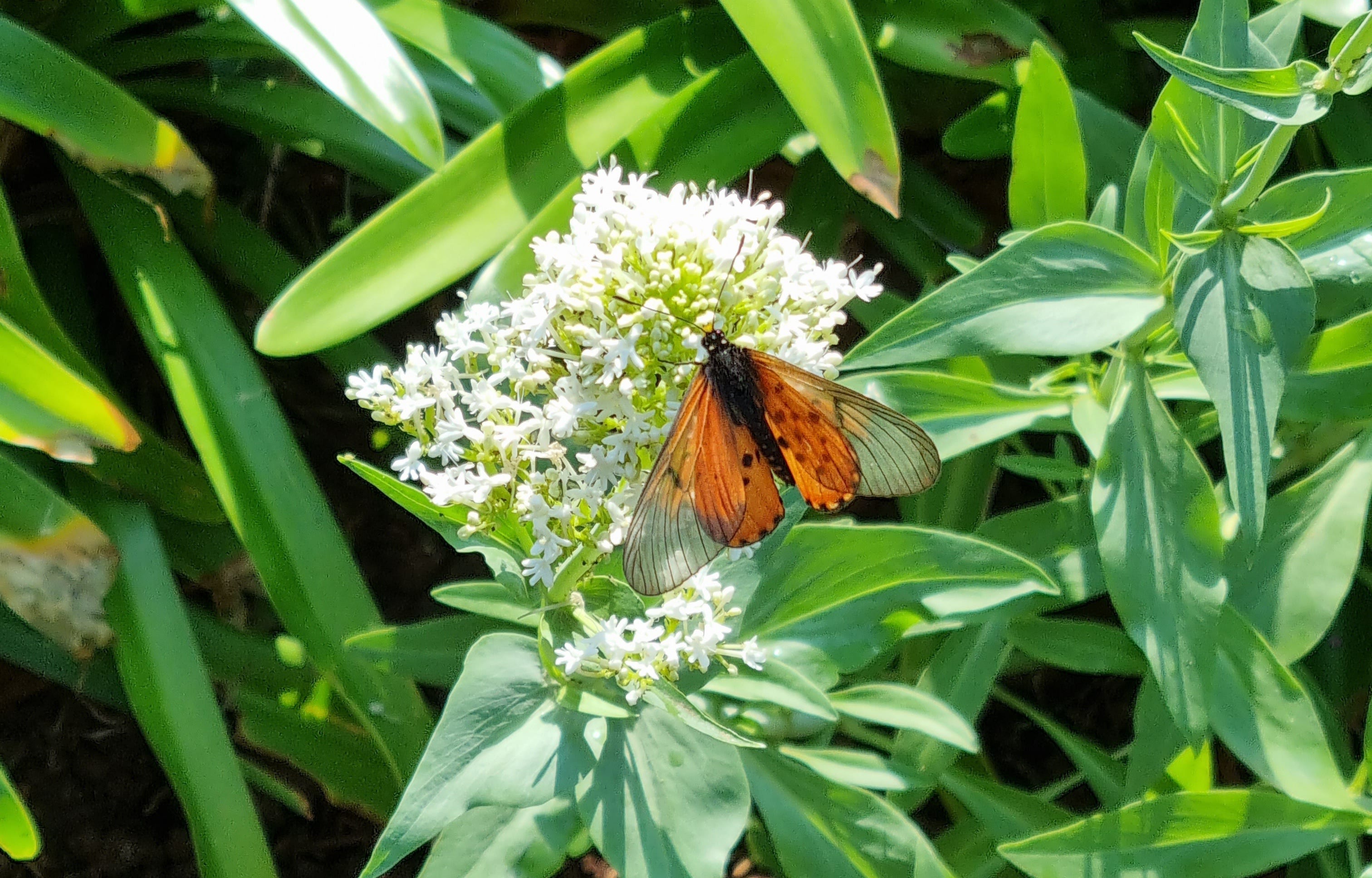
“My rights, my wrongs, I write ‘til I’m right with God.”
- Kendrick Lamar (2015), Alright
Research is not a neutral or innocent exercise in knowledge production. There are many who may be wary of researchers for good reason: between deeply extractive/exploitative patterns of relating to people, i.e. seeing people, their knowledge, their trauma etc. as data to be extracted and used for one’s own benefit and career advancement; the severe risks and ramifications of misrepresentation, especially when research informs policies that directly impact peoples’ lives; and the disconnect between research that is seemingly undertaken for its own sake, and knowledge that is sought and shared as a means of deepening and cultivating collective ethical commitments, serving as bases of material change. To put it plainly, the academy still has a long way to go in recognizing and accounting for the violence in which it is steeped.
Against this backdrop, I’ve been struggling to come to terms with what’s been emerging for me since the beginning of my Master’s dissertation project. How do these problems influence the processes of being/becoming that we experience throughout any given learning journey? Who are we trying to be? Who are we becoming, as we get exposed to new concepts, ideas, and frameworks that challenge our certainties (Fataar, 2018)? And how do we navigate these processes of being/becoming in light of the urgent ethical imperatives with which we’re confronted? To deal with these questions, I turn to a hip-hop album that has been deeply influential in my life, and which is replete with critical points of reflection.
“Fighting a continuous war…”
Kendrick Lamar’s To Pimp a Butterfly was released on March 15th 2015, garnering widespread critical acclaim and commercial success. The album consists of 16 tracks which explore the nuanced contours of “a continuous war” which Kendrick’s loved ones are fighting: at once a war for survival amidst “the omnipresence of death” (McLeod Jr., 2017: 124), and a war to preserve, celebrate, and “appreciate the little bit of life we got left” (i). In the historical context of white supremacy, systemic racism, and police brutality, it is a war that has claimed the lives of many whom Kendrick holds dear, prompting him to grapple with deep feelings of guilt, grief, and anger (u). A few tracks on the album make direct reference to a trip that Kendrick took to South Africa1 while ideating the album, and which allowed him to gain some important perspectives on these feelings.
Kendrick states that while this war was raging on, he was “entering a new one, a war based on apartheid and discrimination”. Effectively, he alludes to entering an epistemic war: a war of conflicting concepts and theories which functions to entrench the very structural conditions which necessitate the war for survival, yet produces just enough liminal space to disrupt and de-familiarize once familiar situations. It is in this context, in this space (that has been and continues to be hard-fought for), that Kendrick’s own epistemic being/becoming is unfolding. In facing the weight of these feelings, placing himself in different environments, and reflecting deeply on his encounters, Kendrick begins to (re)name his world through new concepts.
In turn, Kendrick challenges us as listeners or interlocutors to reflect firstly on how we are receiving the conceptual shifts that he is experiencing in this process of becoming, as painful and messy as these shifts may be; on whether or not we are able to recognize the deeper axiological, ethical quest that is underpinning Kendrick’s search for these concepts; and on what this may mean for our own epistemic being/becoming.
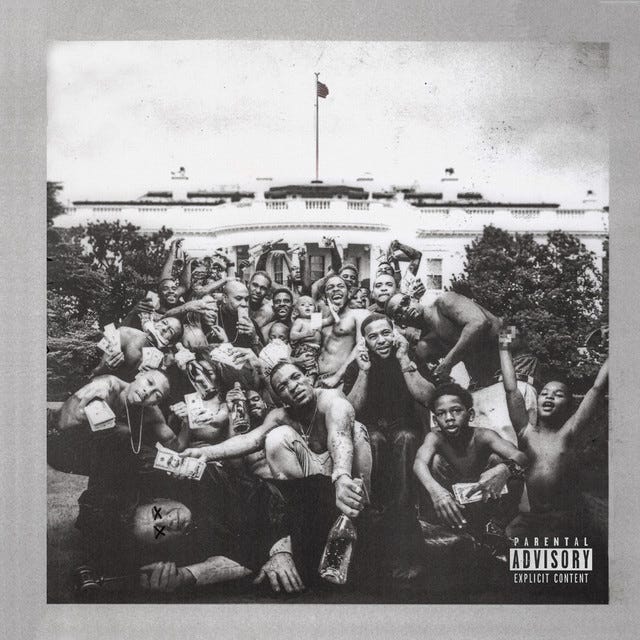
The last track on the album, “Mortal Man”, is a poignant and powerful reflection on the trappings of inherently fallible people being elevated to positions of leadership and treated as icons, only to be abandoned by the very people who claimed to love them. The chorus of the song refers to “the ghost of [Nelson] Mandela”, from whom Kendrick draws inspiration. As the music fades, Kendrick concludes the album’s refrain, suggesting that the cumulative effect of traveling to South Africa, visiting Robben Island, and being in situations that exposed him to new concepts and encounters, was that it:
Made me wanna go back to the city and tell the homies what I learned
The word was respect
[…]
Forgetting all the pain and hurt we caused each other in these streets
If I respect you, we unify and stop the enemy from killing us…
In so doing, Kendrick signals a radical and necessary shift which lies at the heart of epistemic being/becoming: the notion that any given learning encounter wields the potential to affect shifts from what was, towards what is continuously becoming (and possibly, what we are called upon to become).
“The legacy you left behind”: Being/Becoming in Dialogue
The notion of beauty thriving in liminal spaces resonates quite well with Tupac Shakur’s celebration of “the rose that grew from concrete” (Shakur & Giovanni, 1999), a metaphor with which he describes the beauty that he was able to embody despite the harshness of his surroundings. The simulated dialogue between Kendrick and Tupac towards the end of Mortal Man draws attention to how our being/becoming may be inspired by the journeys of our influences and predecessors. And in the case of an artist like Kendrick who draws on a range of artistic, communal, and cultural influences, this process unfolds as a weaving of entangled narratives (Nuttall, 2009).
Kendrick (or rather, one of his friends) offers a beautiful metaphor from which the title of the album is derived. At the end of Mortal Man, Kendrick shares a poem in which his friend likens this journey to the metamorphosis/transformation that a caterpillar undergoes in the process of becoming a butterfly. While being “a prisoner to the streets that conceived it”, focused on consuming its environment in order to survive, the caterpillar regards the butterfly with envy and interprets its “thoughtfulness, talent and beauty” as weakness. Over time, it begins to “[go] to work on the cocoon which institutionalizes him”...
… He can no longer see past his own thoughts
He's trapped
When trapped inside these walls certain ideas take roots,
Such as going home, and bringing back new concepts to this mad city
The result?
Wings begin to emerge, breaking the cycle of feeling stagnant
Finally free, the butterfly sheds light on situations that
The caterpillar never considered, ending the internal struggle
Although the butterfly and caterpillar are
Completely different, they are one and the same."
Part of what makes the comparison so compelling is that, as Higgins & Jabr (2012) explain, the process of metamorphosis entails a caterpillar “digesting itself”, i.e. releasing enzymes to dissolve and disintegrate it’s tissues while retaining core “imaginal discs” and genetic materials. Blackiston, Casey and Weiss (2008) postulate that holometabolous insects like moths and butterflies may even retain their larval memory despite the “radical changes [in] body form, lifestyle, diet [and] sensory modalities” that they experience through metamorphosis. Taken together, such insights suggest that epistemic being/becoming necessitates a degree of dissolution and retention. Yet the question remains of what must be dissolved and what ought to be retained as this process unfolds? And how secure are the walls of this cocoon to begin with?
Tracking my own journey of being/becoming
Incidentally, To Pimp a Butterfly was released a week after the Rhodes Must Fall movement came to bear upon the University of Cape Town. A few months later, the student-led call for free, decolonized education would spread to universities across South Africa, propelling the language of decolonization into popular discourse, and signaling what Dr. Quraysha Ismail Sooliman (2019: 52) has described as a public intellectual confrontation with power, that “was and still is about epistemic, pedagogic and economic justice”. That this call extended beyond the realm of the university holds personal significance, as it marked my first encounter with the language of decolonization, and in effect a major turning point in my own journey of epistemic being/becoming.
Like Kendrick, this journey has been both tumultuous and rewarding, characterized by moments of pain and anxiety as well as deepened insight and awareness. In much the same way that a caterpillar needs to molt and shed its skin at the point beyond which it can no longer “see past its own thoughts”, so too am I needing to let go of my own preconceived ideas about what this process entails. With the support of my supervisor, one of the most significant shifts in this regard has been to recognize the limitations of orientating one’s research entirely around a quest for identity. Especially if such an orientation inhibits us from engaging more creatively, conceptually, and theoretically with the challenges that confront our communities.
Likewise, the idea of embodying epistemic humility has served as a much needed check: a reminder to recognize and acknowledge our limitations as well as the wealth of knowledge on which we can draw. Not only can this serve as a means of deepening in our knowledge but also in our relationships with scholars who have come before us and peers who may be struggling in their own right. In these respects, not only does vulnerability in epistemic being/becoming represent something to be embraced, but it also serves as a necessary means of accessing and deepening our axiological quest; of renewing our normative ethical commitments with greater conceptual clarity.
Conclusion
In conclusion, the notion of epistemic being/becoming invites us to consider the possibility that undertaking a learning journey can be a means of recognizing and accessing capacities for “thoughtfulness, talent, and beauty” within ourselves that we’ve yet to fully embrace. In the context of epistemic war, which functions to perpetuate structural violence, the imperative to cultivate such capacities becomes that much more urgent. By being in relationship and entering into dialogue with others who have walked this path, not only might we find our bearings in these journeys of being/becoming, but we may do so fully embracing the beauty and vulnerability we bring to such encounters.
References
Blackiston, D. J., Casey, E. S., & Weiss, M. R. (2008). Retention of Memory through Metamorphosis: Can a Moth Remember What It Learned As a Caterpillar? PLoS ONE, 3(3). https://doi.org/10.1371/journal.pone.0001736
Fataar, A. (2018). Placing students at the centre of the decolonizing education imperative: Engaging the (mis) recognition struggles of students at the postapartheid university. Educational Studies, 54(6), 595-608.
Higgins, N., & Jabr, F. (2012, August 10). How Does a Caterpillar Turn into a Butterfly? Scientific American. Retrieved June 5, 2023, from https://www.scientificamerican.com/article/caterpillar-butterfly-metamorphosis-explainer/
Lamar, K. (2015). To Pimp a Butterfly [album].
McLeod Jr., J. D. (2017). If God got us: Kendrick Lamar, Paul Tillich, and the advent of existentialist hip-hop. Toronto Journal of Theology, 33(1), 123-135.
Nuttall, S. (2009). Entanglement: Literary and Cultural Reflections on Post-apartheid. Wits University Press.
Shakur, T. A., & Giovanni, N. (1999). The Rose That Grew From Concrete.
Sooliman, Q. I. (2019). History, Naming and Intellectualism in the #FeesMustFall Protests. International Journal of Critical Diversity Studies, 2(1), 41-55. 10.13169/intecritdivestud.2.1.0041
Check out How Much A Dollar Cost, which is one of my favorite tracks on the album.